Addressing characteristics of environmental context - challenges and potential for location-based mobile learning applications
Abstract
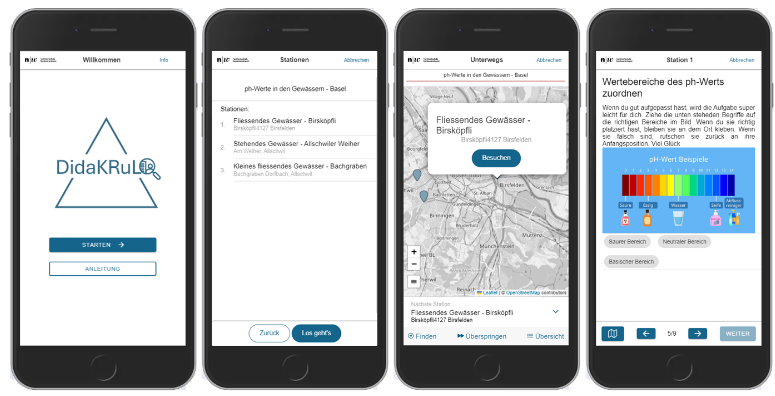
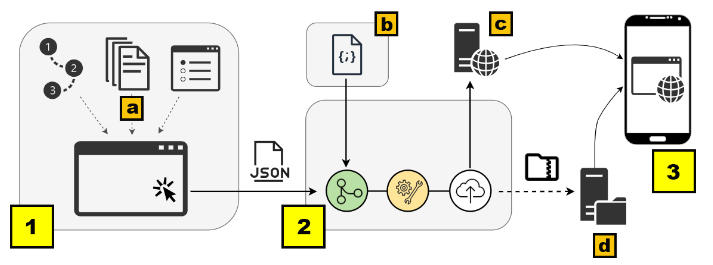
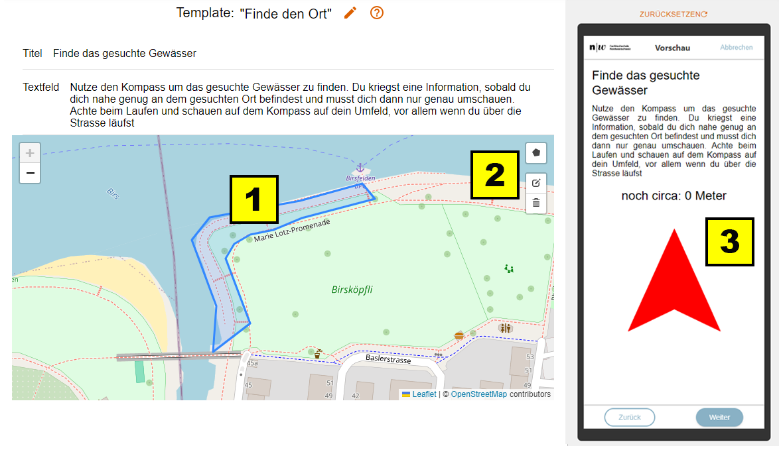
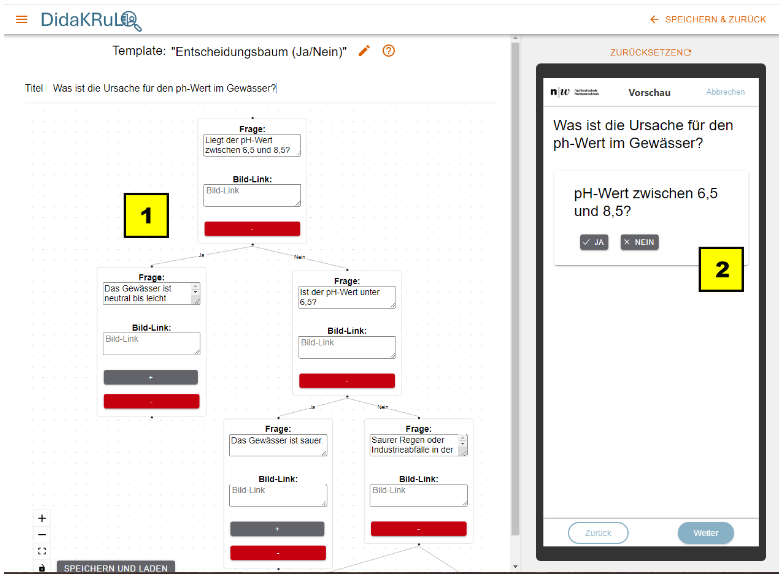
Complexity, uniqueness, and dynamism are intrinsic characteristics of the physical environment that must be carefully addressed in the development of location-based, context-aware mobile learning applications. Designing such applications to deliver meaningful spatial experiences and support learning in extracurricular, field-based education requires identifying and overcoming challenges stemming from these properties, as these challenges influence not only the application’s design and content but also the overall quality of the user experience. We identify and discuss three distinct challenges: (1) the complexity of accurately modeling the form and relationships of spatial phenomena, (2) the constraints imposed by rigid formats and top-down approaches that fail to capture the distinct and inherently unique attributes of contextual entities, and (3) the need to manage the dynamism and ongoing changes in the environment throughout the application’s lifecycle.To address these challenges, we propose solutions grounded in template-based modularity, customizable experiences, and an adaptive, automated architecture. These approaches aim to support educators in authoring, publishing, and maintaining their applications efficiently. Through the demonstration of a prototype framework, we illustrate how these strategies can be implemented in practice while highlighting existing limitations and areas for further development.
Figures
BibTeX
@inproceedings{striewski_envContextInMobileLerning_2025,
 abstract = {Complexity, uniqueness, and dynamism are intrinsic characteristics of the physical environment that must be carefully addressed in the development of location-based, context-aware mobile learning applications. Designing such applications to deliver meaningful spatial experiences and support learning in extracurricular, field-based education requires identifying and overcoming challenges stemming from these properties, as these challenges influence not only the application’s design and content but also the overall quality of the user experience. We identify and discuss three distinct challenges: (1) the complexity of accurately modeling the form and relationships of spatial phenomena, (2) the constraints imposed by rigid formats and top-down approaches that fail to capture the distinct and inherently unique attributes of contextual entities, and (3) the need to manage the dynamism and ongoing changes in the environment throughout the application’s lifecycle.To address these challenges, we propose solutions grounded in template-based modularity, customizable experiences, and an adaptive, automated architecture. These approaches aim to support educators in authoring, publishing, and maintaining their applications efficiently. Through the demonstration of a prototype framework, we illustrate how these strategies can be implemented in practice while highlighting existing limitations and areas for further development.},
 author = {Striewski, Friedrich and Bronowicz, Carolin and Bleisch, Susanne},
 booktitle = {Advances in Cartography and GIScience of the Int. Cartographic Association},
 doi = {10.5194/ica-adv-5-30-2025},
 pages = {30},
 title = {Addressing characteristics of environmental context - challenges and potential for location-based mobile learning applications},
 url = {https://doi.org/10.5194/ica-adv-5-30-2025},
 volume = {5},
 year = {2025}
}